

DATA-DRIVEN INSIGHTS AND NEWS
ON HOW BANKS ARE ADOPTING AI
AI remakes the org chart

Source: Adobe Firefly
19 February 2026
Welcome back to the Banking Brief. This week: JPMorganChase is redoing its AI org chart. Then our new AI Ventures Tracker highlights the three top VC deals banks did last year and why they matter for AI deployment. Plus: the first in our how-to series to help you digest what actually matters in the flurry of new model announcements.
People mentioned in this edition: Teresa Heitsenrether, Derek Waldron, Guy Halamish, Zachery Anderson, Troy Rohrbaugh, Lawrence Wan, Scott Marcar, Erik Brynjolfsson, Abhas Ricky, Karen Cutler, Bruce Ross, Naim Kazmi, Dave McKay, Rajesh T. Krishnamachari, Cherilyn Knaupp-Stumpner and others.
This edition is 1,697 words, a 6 minute read. Check it out online. If you were forwarded the Brief, you can subscribe here. We always want to hear from you at [email protected].
– Alexandra Mousavizadeh & Annabel Ayles

TOP OF THE NEWS
ERA OF AI EXECUTION
JPMorganChase is doubling down on putting its business side in charge of AI.
Last week, America’s largest bank showed the blueprint for how they plan to do it, elevating digital head Guy Halamish to be COO of the commercial and investment bank, the latest in a flurry of moves. His remit is specific: Rethink the structure of the CIB’s business units and their processes to “maximize the impact of AI.”
It’s a new step in a strategy that began two years ago when the bank named business-side veteran Teresa Heitsenrether as the leader of its AI mandate. It was the first – and remains just one of six banks in the Evident AI Index – to put AI leadership on the executive committee. Now, it’s scaling that model into each revenue-generating part of the business.
As part of this shift, the bank is deprioritizing the kind of blue sky thinking that characterized a lot of AI work early on. Its research division, a model for the industry, will shift into the lines of business themselves. It’s chasing a different kind of breakthrough: a full transformation of the business, where its AI platforms, architectures and agents are embedded into every decision made around the bank.
Derek Waldron, chief analytics officer at JPMC, laid out the reason behind the shift in a podcast in December: “At some point, a very powerful model – call it super intelligence – is going to show up on the doorstep,” he said. “And then the problem statement is, how do you use it?” Even the most advanced system creates ‘no value’ if it can’t connect to “the systems, the data, the tools, the knowledge, the processes that exist within the enterprise.”
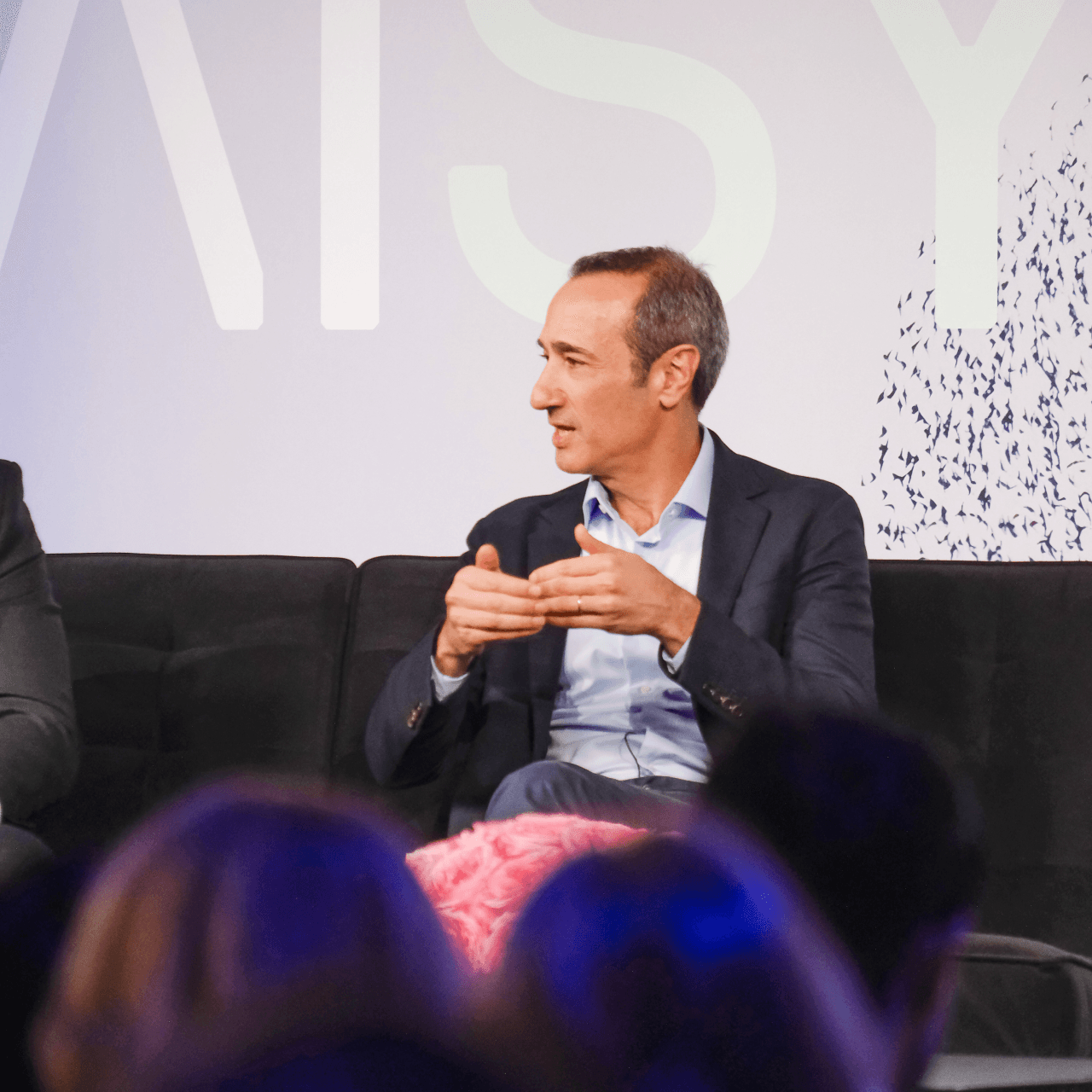
Creating that connective tissue so AI moves from saving time to generating revenue sits at the core of Halamish’s new job: Among his first priorities will be appointing chief data and analytics officers inside each major CIB business line to sit next to its business heads and rewrite each team’s functions with AI at the center. The bank already brought aboard former NatWest CDAO Zachery Anderson to do that work in payments and is now looking for AI leaders for markets, global banking and securities services arms. “We're going to attack the cost side, but I'm really excited about what we potentially can do on the revenue side,” said CIB co-CEO Troy Rohrbaugh last week during a UBS investor conference. “That's the game-changing part of AI for our franchise.”
This same pattern is emerging elsewhere. UBS brought its technology function under COO Beatriz Martin “to support smooth end-to-end operation” in December. And the bank is now hiring leaders focused specifically on boosting agentic adoption in different business lines and managing the workforce changes that come with it. Meanwhile, Lawrence Wan, chief architect and innovation officer at BMO, said on a podcast last week the bank is “very much focusing on applying AI… less about research, the next frontier AI capabilities, but more focusing on what is already proven and commercially available.”
“The future of AI-first enterprises is ultimately an organization problem,” JPMC’s Waldron wrote on LinkedIn this week. “Work and intelligence needs to be optimally split across humans and AI.” Finding that balance is the next great challenge for bank leaders. And it means, as one bank leader told us this week, the mechanics are going to be more valuable than the magicians.
COMING NEXT WEDNESDAY
Evident AI Index | Payments

Next week, we will be launching the Evident AI Index for Payments - an unrivalled benchmark of AI maturity across leading payment networks and processors in North America and Europe.
Built on 60+ indicators across Talent, Innovation, Leadership, and Transparency, the Index provides an independent, data-driven view of how providers are adopting AI across their organizations.

VENTURE TRACKER
TOP 3 AI DEALS OF 2025
The 50 banks we track made 199 tech venture investments in 2025, according to the Evident AI Ventures Tracker, out today. We picked three deals that show not just how banks are using ventures to sharpen their own operations but to position themselves to capitalize on the biggest AI trends around the sector.
#1 PERSONAL CFAS
Firm: Conquest Planning
Investing banks: Citi Ventures, BNY, Goldman Sachs Growth Equity
Latest round: $110 million (series B)
What it does: The firm’s AI analyzes a client’s financial situation and spits out bespoke financial plans and advice.
Why it makes the list: It’s a targeted bet that AI can change the economics of financial planning and allow advisors to handle more clients. Wealth management tools are one of the fastest growing use case areas for banks, our latest analysis shows. BNY embedded Conquest’s software into its PershingX wealth platform to reap its efficiency benefits in the short term. But the longer payoff for the invested banks comes in the company’s plan to use agentic AI to go from generating advice to executing off of that advice. Cracking that would take the investment from an operational boon into venture-style returns.
#2 REALITY CHECK
Firm: GetReal Security
Investing banks: Capital One Ventures
Latest round: $17.5 million (series A)
What it does: GetReal’s tech analyzes video, audio and images to determine if they’re genuine or AI-generated and uses it to thwart identity theft and deepfake scams.
Why it makes the list: The investment is as much a bet on fraud prevention as it is on the continued growth of generative and agentic AI. The appeal is how widely the tech can plug in. Capital One can access tools to counter deepfake scams today, but the growth angle is in identity and access management that can keep pace with Big Tech product releases. Banking now happens across phones, tablets, voice assistants and whatever technology gets invented next. Having the inside line on verifying who’s on the other end means deepfake protection isn’t just defensive, but a way for the bank to roll out new ways to serve customers faster.
#3 ENCODER RING
Firm: Norm Ai
Investing banks: Citi Ventures
Latest round: $103.5 million (series B)
What it does: Norm Ai takes regulatory requirements and internal policies, turns them into machine-readable logic and deploys agents to review business processes to see where they come up short.
Why it makes the list: Having documented proof that AI can stay within the lines is a surefire way to accelerate the AI rewiring banks are now doing in each line of business. Citi is experimenting with Norm’s tech internally to speed up compliance reviews. The venture angle is bigger: Regulation will almost certainly continue to trail technological change. As companies hand more responsibility to tech tools, being the tool that can translate the language of compliance into guardrails AI can understand would make it one of the stickiest parts of the stack.
* * * * *
OUT TODAY: The Evident AI Ventures Tracker is our comprehensive database of more than 700 AI-related investments made by 50 of the world’s largest banks and analysis of the trends shaping today’s deal landscape. Evident members can explore the data and read our full analysis here.

STAT OF THE WEEK
.png%3FupdatedAt%3D2026-02-19T15%3A16%3A46.293Z&w=3840&q=100)
The share of NatWest’s operating expenses spent on tech, data and AI, according to the bank’s annual results announced on Friday. The £1.2 billion ($1.6 billion) investment fueled the bank’s firmwide rollout of tools CIO Scott Marcar said, including developer tools, which now write 35% of the bank’s code. Still, the British bank is spending less of its budget on tech than big U.S. rivals: JPMorganChase’s $18 billion tech budget and Bank of America’s $14 billion tech spend are both roughly 20% of the banks’ overall expenses.
Yes, but: There’s a growing focus on wasteful tech spending as banks chase more meaningful ROI. Leading banks are putting more focus on finding the right size model for each task, rather than opting for the most powerful new release. “We are moving toward AI systems that know when to stop thinking,” wrote Abhas Ricky, chief strategy officer at Cloudera in an op-ed last week. “These are models engineered for precision, cost efficiency, and sound reasoning rather than endless computation.”

USE CASE CORNER
LIFE SAVER
During Manulife’s earnings presentation last week, the firm revealed it reaped $300 million of enterprise value from AI in 2025. By 2027, it expects that to rise to $1 billion. And in five years time, it expects a 7x return on its AI investment. In the “Corner” this week, we look at a tool Manulife Canada rolled out publicly last month to automate life insurance approvals, which takes a similar approach banks do to lending and credit decisioning.
Use Case: Digital life insurance application
Vendor: n/a
Firm: Manulife
Why it’s interesting: The tool cuts the amount of time it takes to get life insurance by simplifying the user experience and the back-end processing that underwriters do. By pushing AI deeper into what had previously been a largely-manual process, the insurance company gives employees more time to handle edge cases and improves its customers’ lives by eliminating long medical forms.
How they did it: The insurance company built enhancements into MAUDE (Manulife Automated Underwriting Decision Engine) which it originally launched in 2018. At the core was a new style of “reflexive questioning” that gets the form to mirror a conversation an applicant might have with a physician rather than a static form. It tailors some questions based on how old the applicant is or what kind of coverage and removes others that are irrelevant. The model was trained like a human underwriter, said Karen Cutler, the firm’s chief underwriter for individual insurance, noting that it began with almost no approval authority and got more as they reviewed its outputs.
By the numbers: The application form now asks 40% fewer medical questions, and automatic approvals happen in two minutes, the insurance firm said. 58% of qualified applicants now have their applications automatically processed, a 56% increase from before the launch. “Our next natural place to go is with our critical illness insurance,” said Cutler. “These underwriting decision tools that are AI-enabled can be applied on most products within some framework.”
Bigger picture: Manulife isn’t the only Canadian institution moving towards handing off the easy parts of underwriting to AI. In recent months, RBC committed to moving the auto-adjudication of small business loans from 32% to 90% by 2027. TD Bank already pre-approves some mortgage lines in seconds. The pattern here is the same whether it’s a life insurance policy or a HELOC: Automate the routine, save the human for the hard cases.

Want to speak directly to tech decisionmakers at the biggest banks around the world? Our highly-engaged audience of more than 20,000 subscribers includes CIOs, CDAOs, CTOs and CEOs of the top banks and financial services companies. Sponsorship for 2026 is now open; secure your spot today.
.svg&w=96&q=80)
TALENT MATTERS
BAY STREET SHUFFLE
RBC created a new AI group reporting to CEO Dave McKay which the bank says will “accelerate the bank’s AI ambitions over the next several years.” Bruce Ross will lead the group as group head of AI, after spending 12 years as the bank’s head of technology and operations. Naim Kazmi will take Ross’ place in that role.
Rajesh T. Krishnamachari is now global head of quantitative analytics at Apollo Global Management, with a focus on “evolving our investment frameworks by integrating AI.” He’s previously held data and AI roles at Bank of America and JPMorganChase.
Cherilyn Knaupp-Stumpner is now head of product innovation (agentic, AI, automation) for voice servicing at Wells Fargo. She’s been with the bank since 2024. She previously spent six years at JPMC.
Michael Wynn is now head of The Academy for AI Capabilities & Enterprise Learning at Bank of America, where he’ll focus on how to “accelerate AI adoption,” he wrote on LinkedIn.

NOTABLY QUOTABLE
“The updated 2025 U.S. data suggests we are now transitioning out of this investment phase into a harvest phase where those earlier efforts begin to manifest as measurable output.”
– Erik Brynjolfsson, director of Stanford University’s Digital Economy Lab, in the Financial Times, Feb. 15
SUPERVISED LEARNING
HOW TO READ A MODEL RELEASE
The pace of LLM development is faster than ever and harder to parse. In this new series, we’ll guide you through how to decipher the ever-flowing announcements one piece at a time. Up first: cost.
In the last week, OpenAI, Anthropic, Alibaba, Z.AI and MiniMax all shipped competitive models. If you’re trying to figure out what using any of them will run you, start with the number every announcement contains: $/MTok, or dollars per million tokens.
A token is just a small chunk of text. Models bill you based on how many tokens you send in, and how many they send back. That headline price is useful, but it’s not the full receipt because it ignores a hidden line item: reasoning.
Most frontier models now “think” before they answer. That thinking is just more tokens, generated quietly in the background, and billed like everything else. So two models can have similar sticker prices, while one routinely runs up the meter by thinking longer.
That’s where independent testing comes in: Artificial Analysis found that the new version of Claude Sonnet released on Wednesday used more tokens on a benchmark test that simulated “office work” than Opus 4.6 – despite Sonnet being marketed as the cheaper option.
Bottom line: This kind of model accounting is becoming more important as banks emphasize using the right model for the right task. The most accurate cost estimates come from testing it on your own workloads (see: “Eval-ution”, The Brief, June 12). But the headline pricing ($/MTok) and third-party analysis can at least tell you if you’re in the right ballpark for what you need.

WHAT'S ON
Tues 24 - Thurs 26 Feb
International Association for Safe & Ethical AI, Paris
Tues 3 - Weds 4 March
Advanced Model Risk USA, New York, NY
Weds 15 - Thurs 16 April
AI in Finance Summit, New York
- Alexandra Mousavizadeh|Co-founder & CEO|[email protected]
- Annabel Ayles|Co-founder & co-CEO|[email protected]
- Colin Gilbert|VP, Intelligence|[email protected]
- Matthew Kaminski|Senior Advisor|[email protected]
- Kevin McAllister|Senior Editor|[email protected]
- Daniel Shackleford Capel|MD, Banking|[email protected]
- Maryam Akram|Senior Research Manager|[email protected]
- Zachary Groz|Reporter|[email protected]
- Andrew Haynes|VP, Innovation|[email protected]
- Alex Inch|Data Scientist|[email protected]
- Sam Meeson|AI Research Analyst|[email protected]
- Gabriel Perez Jaen|Research Manager|[email protected]
- Jay Prynne|Head of Design|[email protected]
- Marcus Gurtler|Junior Designer|[email protected]

