Where Banks Are Unlocking Real Value from AI
Tuesday, April 14, 2026
15:00-16:00 BST / 10:00-11:00 EDT
Virtual Roundtable
Summary
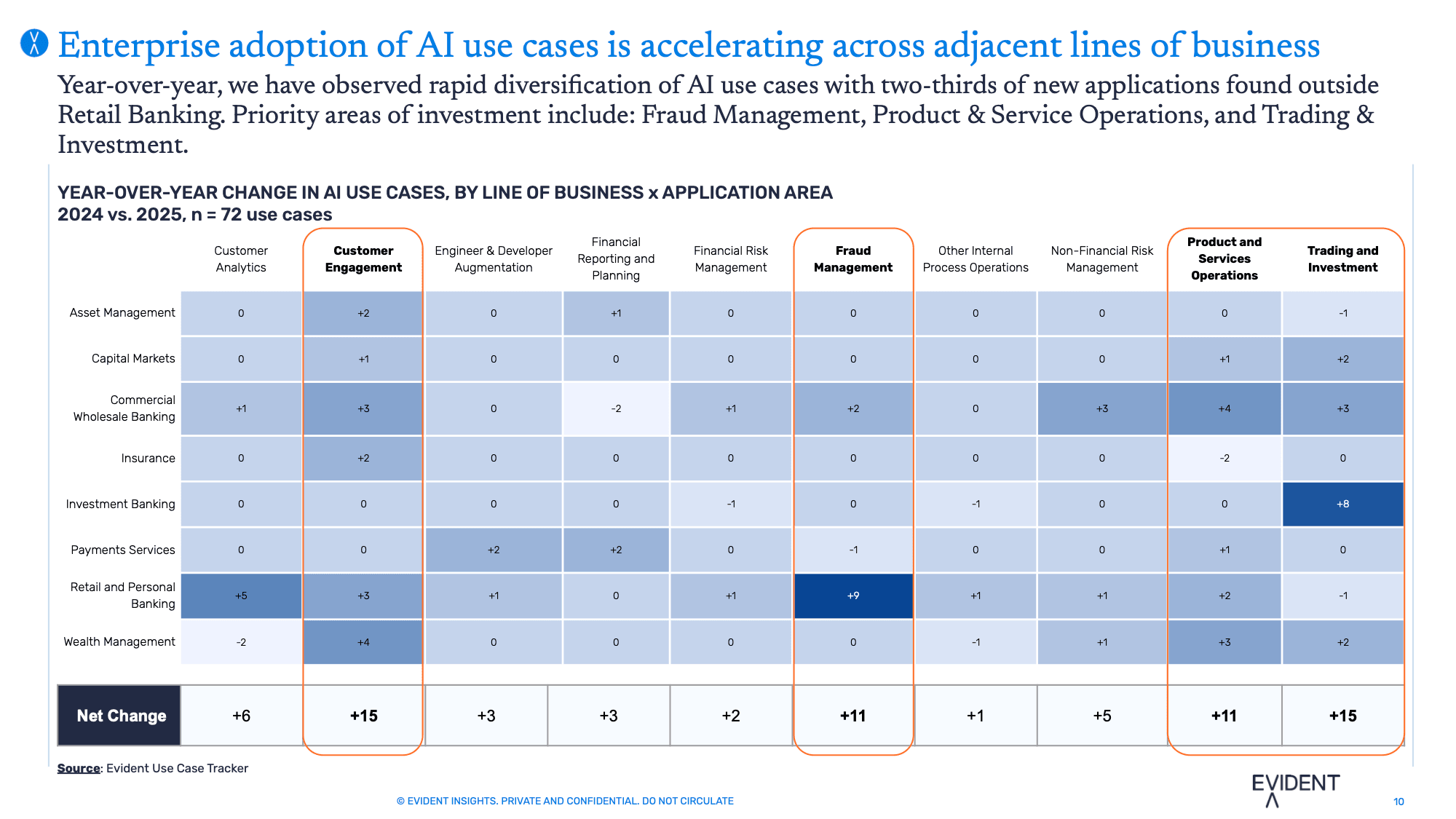
Banks in the Evident AI Index reported nearly 50% more AI use cases in 2025, and the latest data from our Use Case Tracker shows no sign of this momentum slowing. Agentic applications are being deployed at pace, AI is pushing deeper into front-office functions and banks are starting to demonstrate more measurable returns than ever before.
As deployments multiply, banking leaders are facing increasingly complex challenges: How do you scale agentic architecture without losing control? What does the right infrastructure and organizational design look like? And – above all – where is enterprise-wide ROI truly materializing, and how do you prove it?
This Banking Roundtable brought together Kristin Milchanowski (Chief AI and Quantum Officer at BMO), Faraz Shafiq (Chief AI Product and Solutions Officer at Wells Fargo) and Sameer Gupta (Financial Services AI Leader at EY) to discuss where banks are deploying AI, where ROI is materializing, and how strategic partnerships and risk frameworks are evolving.
Drawing on exclusive data from the Evident Use Case Tracker, the conversation explored the latest trends shaping banking's AI trajectory in 2026.
Sponsored by

Key Discussion Topics
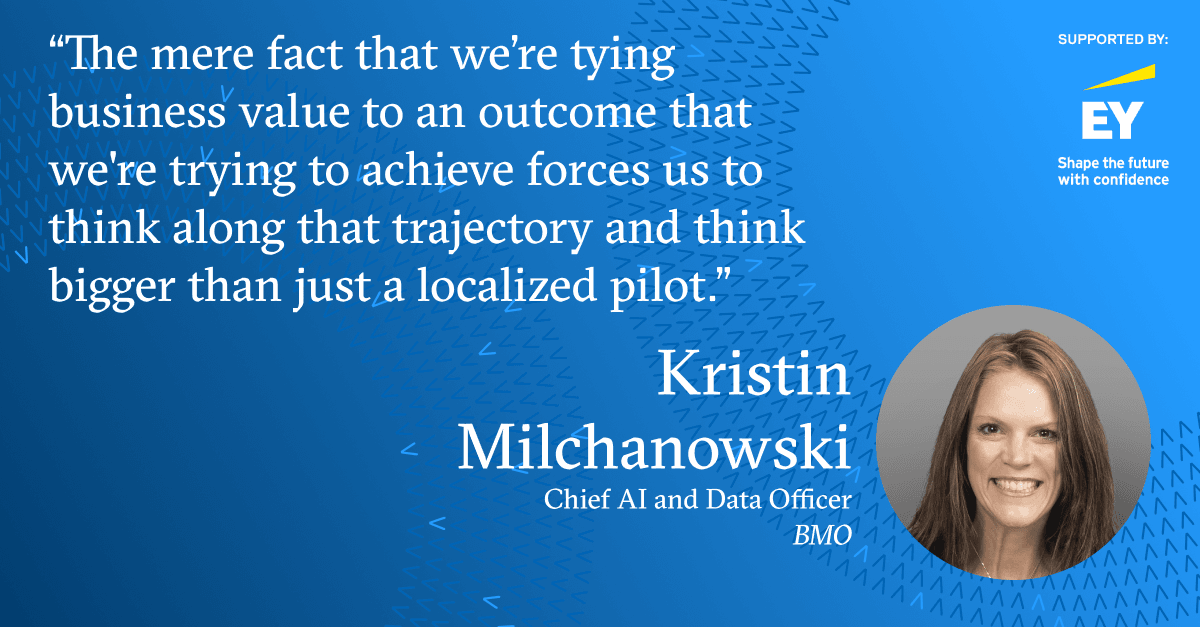
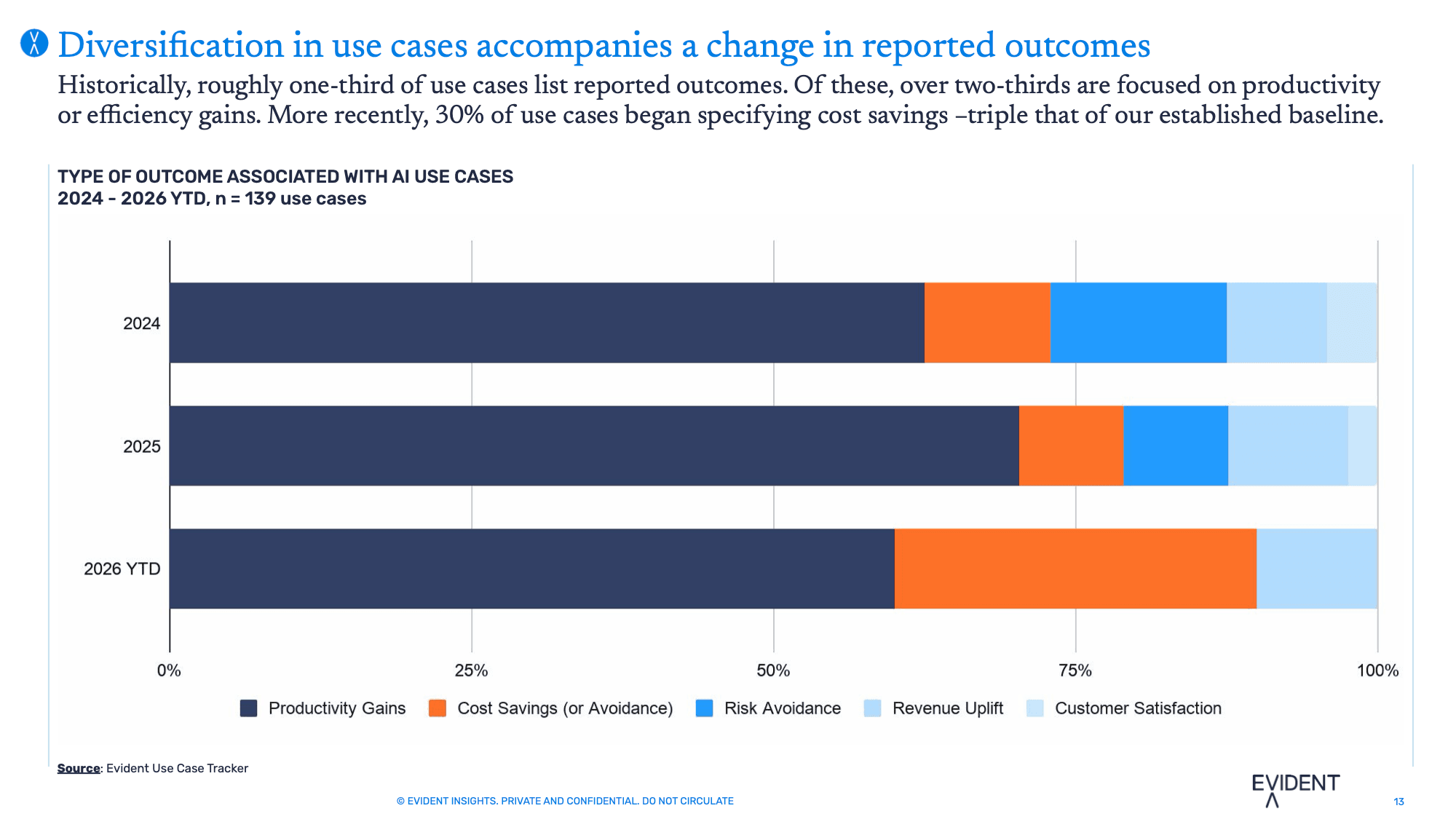
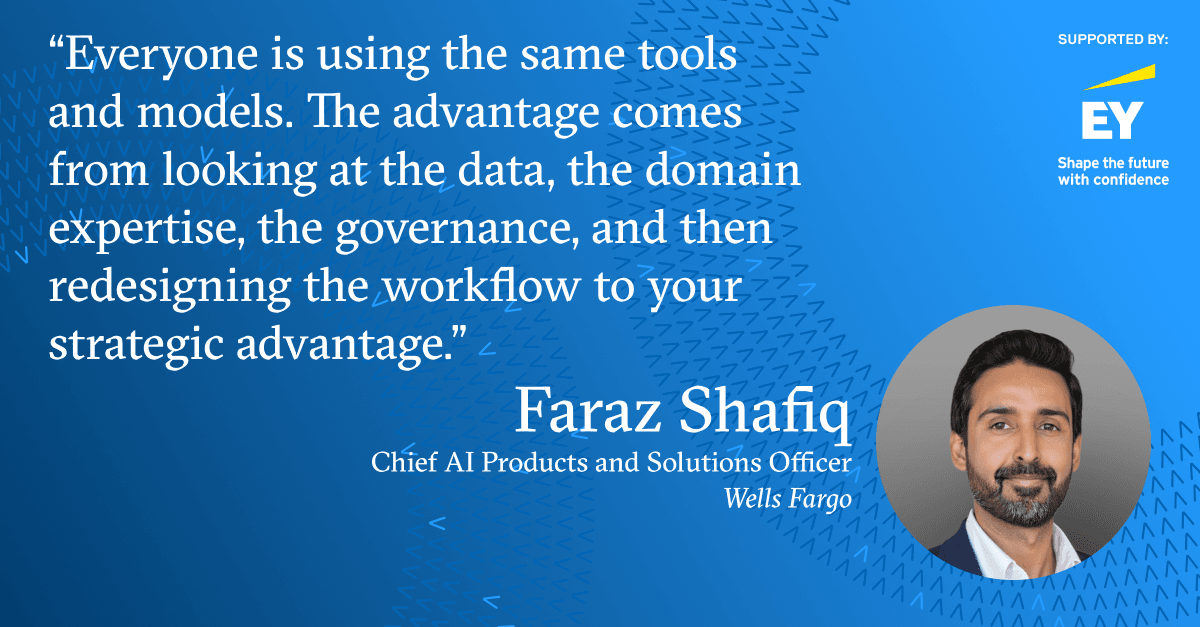
- Measuring what matters: A growing number of banks are publicly reporting realized or projected ROI across all AI activities. BMO's disclosure of a C$1 billion AI opportunity, anchored in rigorous financial tracking and a new "intelligent operating leverage" framework, exemplifies the discipline required. Meanwhile, we learned from Faraz the fastest payback comes from redesigning repeatable workflows, high-volume, high-impact use cases, and validating outcomes directly with finance and line-of-business leaders.
- Horizontal platforms, vertical pull: Both Wells Fargo and BMO described a model where shared horizontal capabilities (governance, platform, security) accelerate vertical line-of-business applications. Some key processes such as income verification, fraud detection and authentication become reusable building blocks rather than one-off solutions.
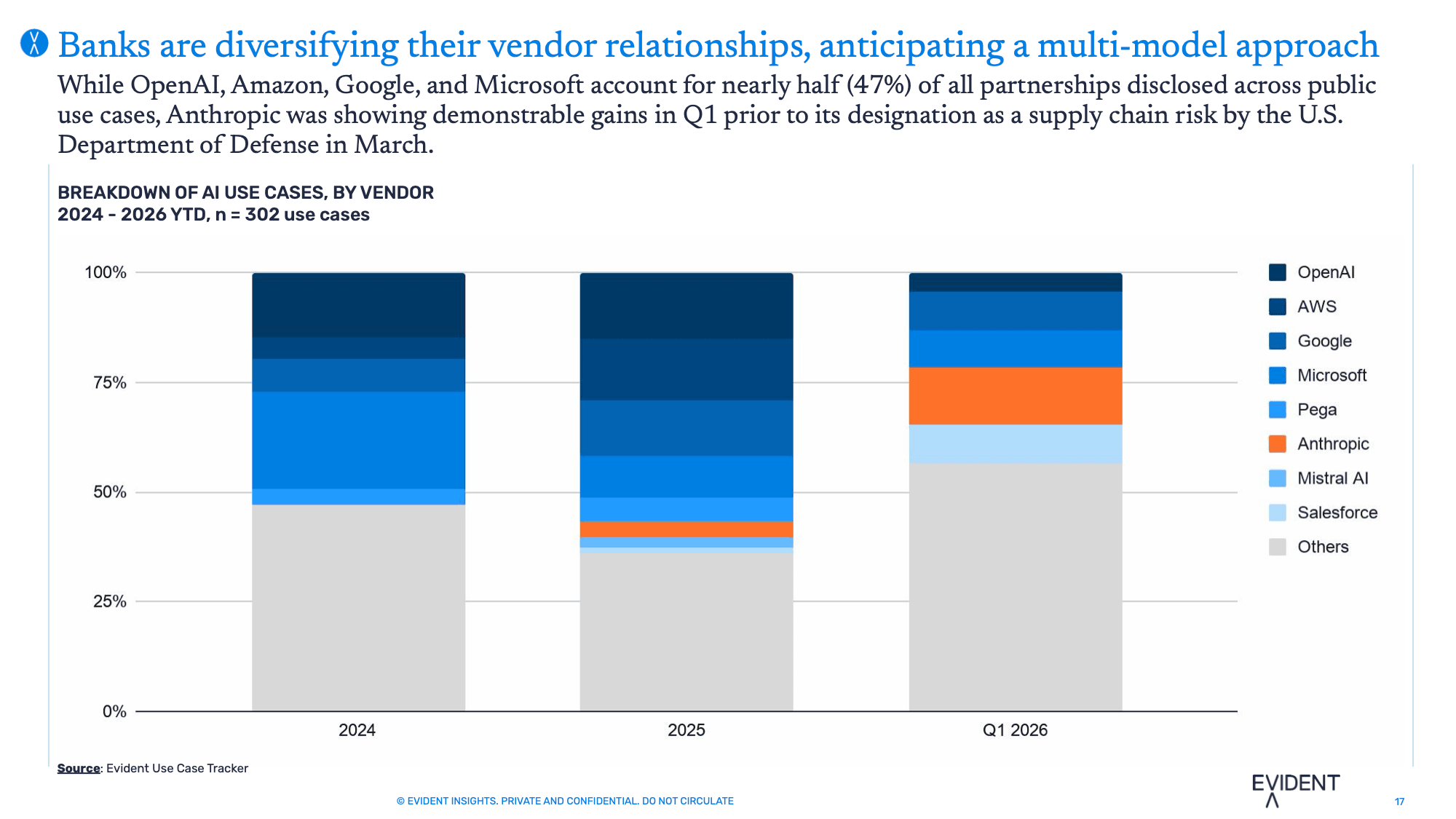
- Partnerships in a fast-moving landscape: The vendor ecosystem is fragmenting. For the first time, the long tail of partners outside the most-referenced names exceeds half the sample. Banks are shifting from a "build vs. buy" question to a flexibility question: staying architecturally adaptable as model capabilities evolve on near-weekly cycles, while remaining uncompromising on production-grade security, governance and auditability.
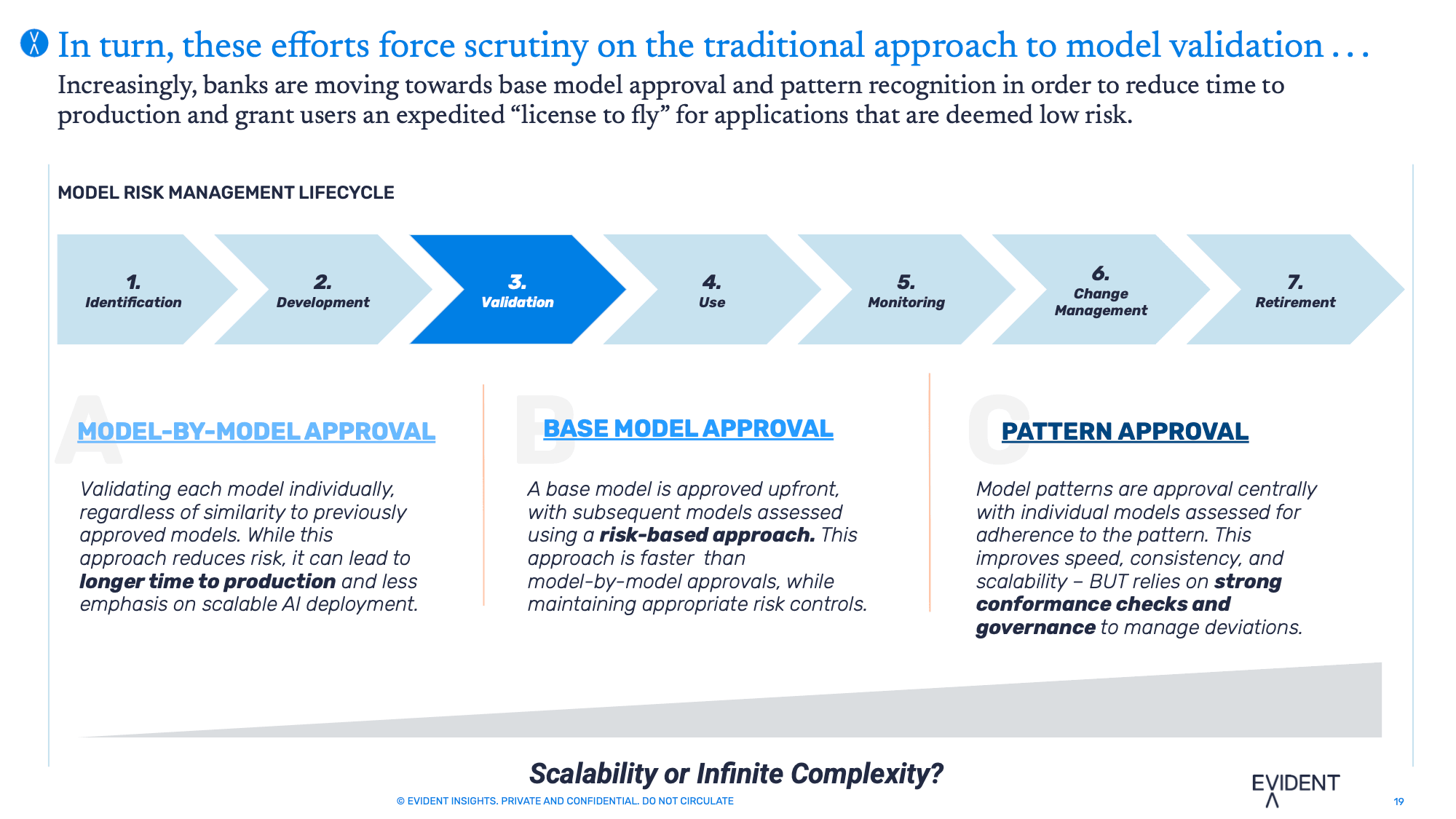
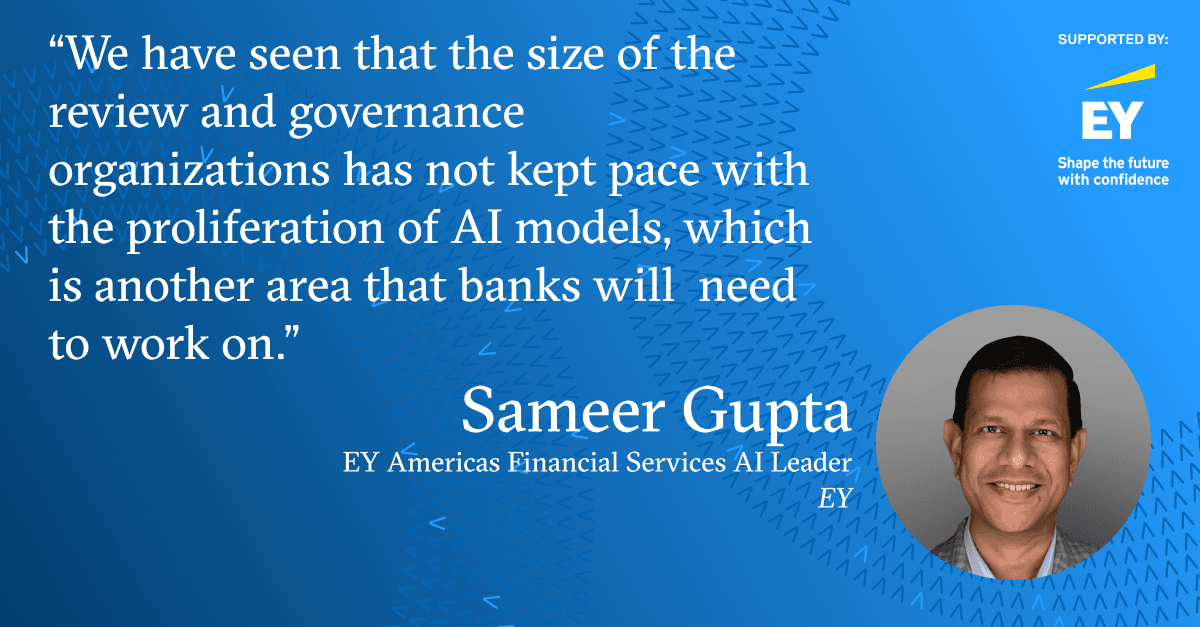
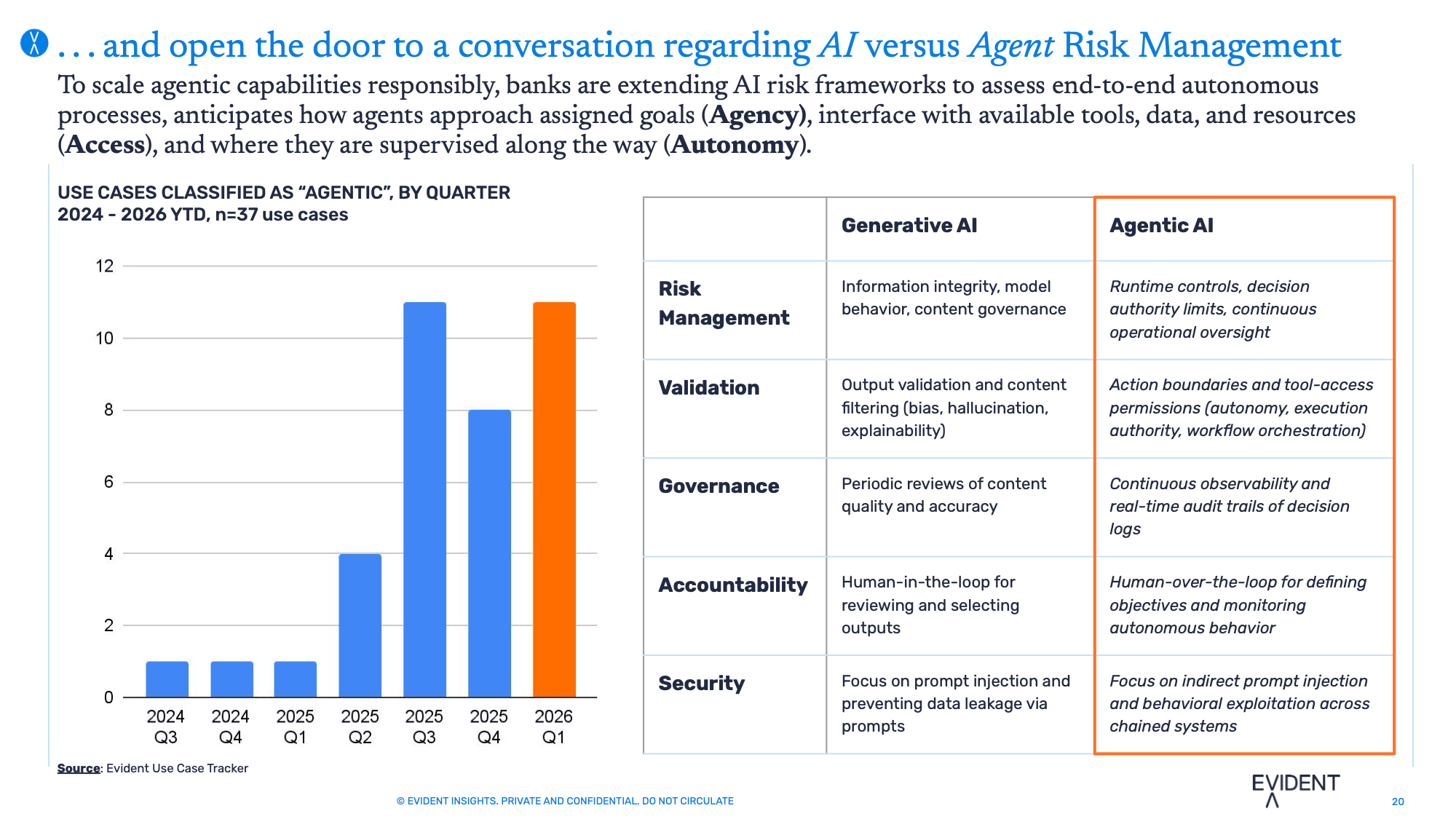
- Excitement about Agentic AI is tempered by hard questions: Agentic applications are growing rapidly in the Use Case Tracker, but panellists flagged critical unsolved challenges: defining where human-in-the-loop oversight sits, managing limited context windows, ensuring interoperability across multi-vendor ecosystems, and building the orchestration and control frameworks needed for safe deployment in a regulated environment.
Speakers

Kristin Milchanowski
Chief AI and Quantum Officer, BMO

Faraz Shafiq
Chief AI Products and Solutions Officer, Wells Fargo

Sameer Gupta
Americas Financial Services AI Leader, EY

Alexandra Mousavizadeh
Co-Founder & Co-CEO, Evident

Moderator: Colin Gilbert
VP, Intelligence, Evident
Key Slides & Perspectives